In the complex machinery of modern manufacturing and logistics systems, flat belts play a subtle yet essential role. These belts, known for their broad contact surface and flexibility, are used for transmitting motion and power between pulleys in a wide range of industrial equipment-from textile machines to conveyors to packaging lines.
Choosing the right flat belt is not simply a matter of matching sizes. It involves understanding material properties, operating conditions, tension requirements, and even environmental influences.
What Is a Flat Belt?
A flat belt is a continuous loop of flexible material that runs over flat or slightly crowned pulleys to transmit power or motion. Unlike V-belts or timing belts, flat belts do not have teeth or ridges, relying instead on friction and surface area for grip.
They are commonly used in:
- Conveyor systems
- Textile and printing machinery
- Packaging lines
- Processing equipment
- Light-duty power transmission
Their advantages include:
- High efficiency due to low bending resistance
- Quiet operation
- Simple installation and replacement
- Versatility across machines and layout
Key Selection Factors
Selecting a flat belt requires evaluating multiple factors that affect performance, longevity, and cost. Below are the critical considerations:
Load and Torque
One of the most important parameters is the load the belt will carry or the torque it needs to transmit. Flat belts are better suited for light to medium-duty applications, though high-strength materials now allow for heavier operations.
Engineers should calculate:
- Required tensile strength
- Starting torque
- Acceleration and deceleration cycles
Underrated belts may stretch or slip under load.
Belt Speed
Operating speed significantly impacts centrifugal forces and heat generation. At high speeds (over 25 m/s), belt materials must be light, durable, and balanced to prevent vibration and premature failure.
Center Distance and Pulley Diameter
Smaller pulley diameters and longer center distances introduce greater flexing, requiring belts with higher fatigue resistance and better flexibility.
- Minimum pulley diameter depends on the belt thickness and material.
- Excessively small pulleys can lead to edge cracking and surface wear.
Environmental Conditions
Environmental factors like temperature, humidity, dust, and chemical exposure can affect belt material performance.
- PU-coated belts are suitable for abrasion resistance.
- Rubber belts offer better grip in oily environments.
- Fabric-core belts can tolerate high temperatures but may degrade in humidity.
Alignment and Tensioning
Flat belts require precise pulley alignment and consistent tensioning. Misalignment can lead to belt tracking issues and edge wear, while poor tensioning causes slip or premature stretch.
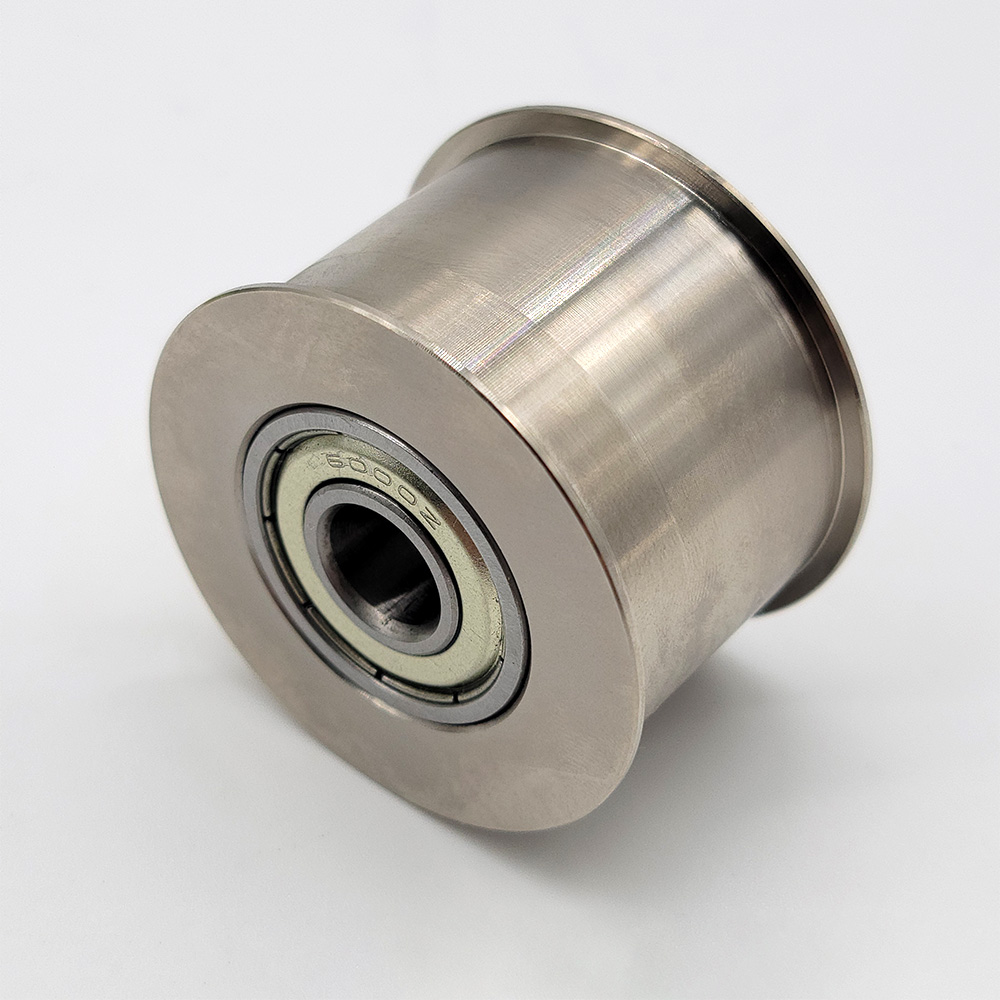
Some systems use tensioning pulleys or idlers to maintain appropriate force.
Flat belts remain a relevant and efficient choice for a wide range of industrial systems, offering quiet operation, simplicity, and compatibility with high-speed applications. Proper selection, based on a clear understanding of application demands, can lead to improved efficiency, reduced downtime, and longer service life.
Engineers and procurement teams are encouraged to work closely with belt manufacturers or technical distributors, especially when specifying belts for critical or customized systems. A wellchosen flat belt isn't just a component—it's a key part of operational reliability.
Polyurethane Roller&wheel
Shock Absorbing Products
Pulley Wheel
Rack And Pinion
Spring Plunger
Ball Transfer Unit
CNC Parts