Material Selection for Cam Followers: Engineering Performance Starts with the Right Alloy
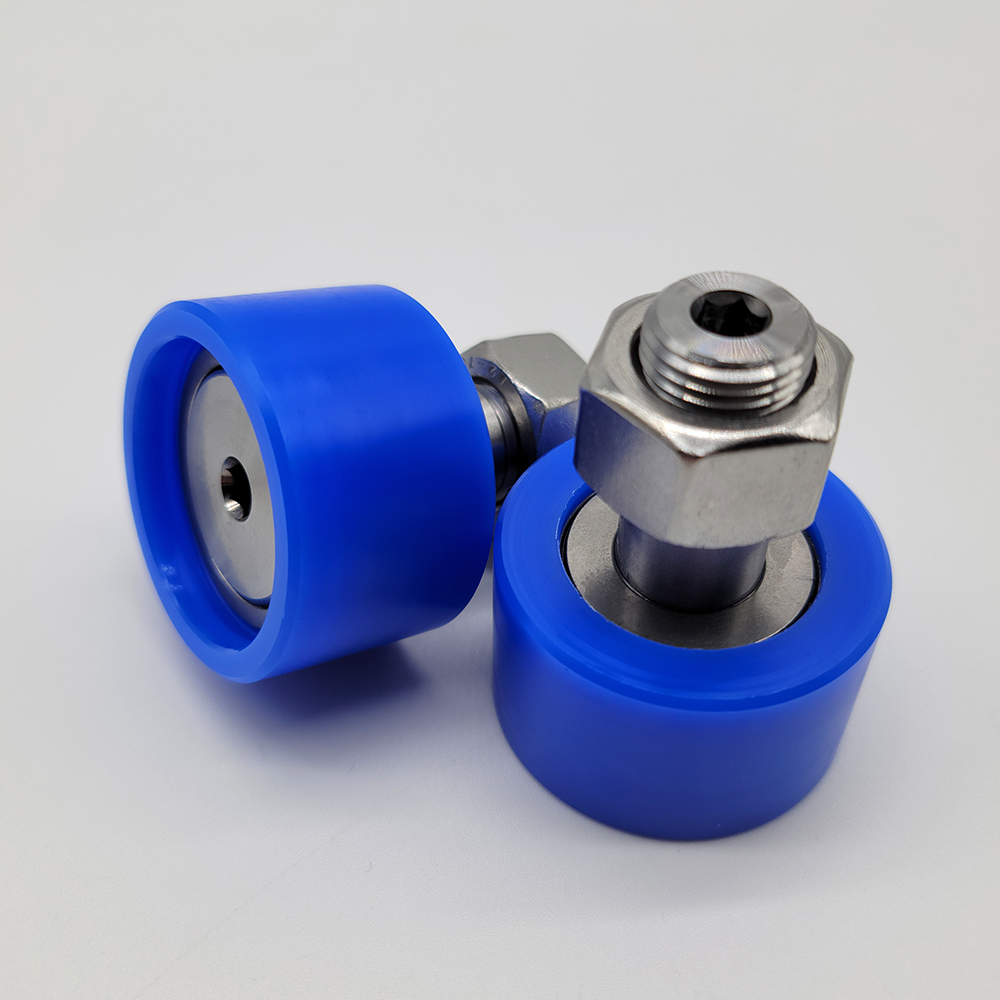
Cam followers, also known as track rollers or cam roller bearings, are critical components in automation equipment, conveying systems, packaging lines, and machine tools. While the geometry and bearing design are often well understood, one key factor is frequently underestimated: the choice of material.
The material composition of a cam follower—from its outer ring to the stud and internal rolling elements—directly impacts its wear resistance, load capacity, corrosion resistance, and cost. In high volume or mission-critical systems, using the wrong material can shorten service life, increase maintenance frequency, or even result in unexpected failure.
Why Material Matters in Cam Followers
Unlike general-purpose bearings, cam followers are designed to operate under:
Unlike general-purpose bearings, cam followers are designed to operate under:
- High radial loads
- Edge loading or misalignment
- Oscillating or impact motiond
- Variable speed and load cycling
Such conditions demand materials with strong surface hardness, fatigue resistance, dimensional stability, and—in many cases—corrosion resistance.
Material selection isn't a single-variable decision. It must account for:
- Mechanical stress
- Lubrication environment
- Temperature and humidity
- Potential exposure to chemicals or particulates
Potential exposure to chemicals or particulates
1.Bearing Steel
Use Case: Standard cam followers for dry, indoor environments
Characteristics:
- High carbon, chromium alloy steel
- Excellent wear and fatigue resistance
- Can be heat-treated for surface hardness above HRC 60
Limitations:
- Susceptible to corrosion in humid or wet conditions
- Requires regular lubrication to prevent rust
2.Stainless Steel
Use Case: Clean room environments, food processing, high humidity
Characteristics:
- Moderate to high corrosion resistance
- AISI 440C offers good hardness with heat treatment
- AISI 304 provides better corrosion protection but lower load capacity
3.Case-Hardened Alloy Steel
Use Case: High-load or impact-prone applications
Characteristics:
- Good core toughness with hardened outer layer
- Suitable for stud-type cam followers under dynamic loading
- Optimized for shock absorption without cracking
4.Tool Steel
Use Case: Precision linear cam guides or custom cam followers
Characteristics:
- Very high hardness
- Good resistance to abrasion
- Used for special applications needing tight tolerance and hardness
In cam follower design, material is not a secondary consideration—it is a foundational choice that dictates how well the component performs under specific operating conditions. By selecting the right materials, engineers can maximize service life, reduce downtime, and improve system efficiency, especially in high-cycle or high-demand industrial applications.
Material choice should always be aligned with real-world working conditions, not just catalog specifications. As mechanical systems grow more complex and diversified, precision in material selection becomes more than a technical detail—it becomes a strategic decision.
Polyurethane Roller&wheel
Shock Absorbing Products
Pulley Wheel
Rack And Pinion
Ball Transfer Unit
Spring Plunger