In today's diverse industrial landscape, off-the-shelf components don't always meet the growing demand for specialized machinery, precise motion, or compact design constraints. Among motion transmission elements, timing belt pulleys are vital for applications that rely on exact mechanical synchronization. However, when system requirements exceed standard specifications, custom timing belt pulleys become essential.
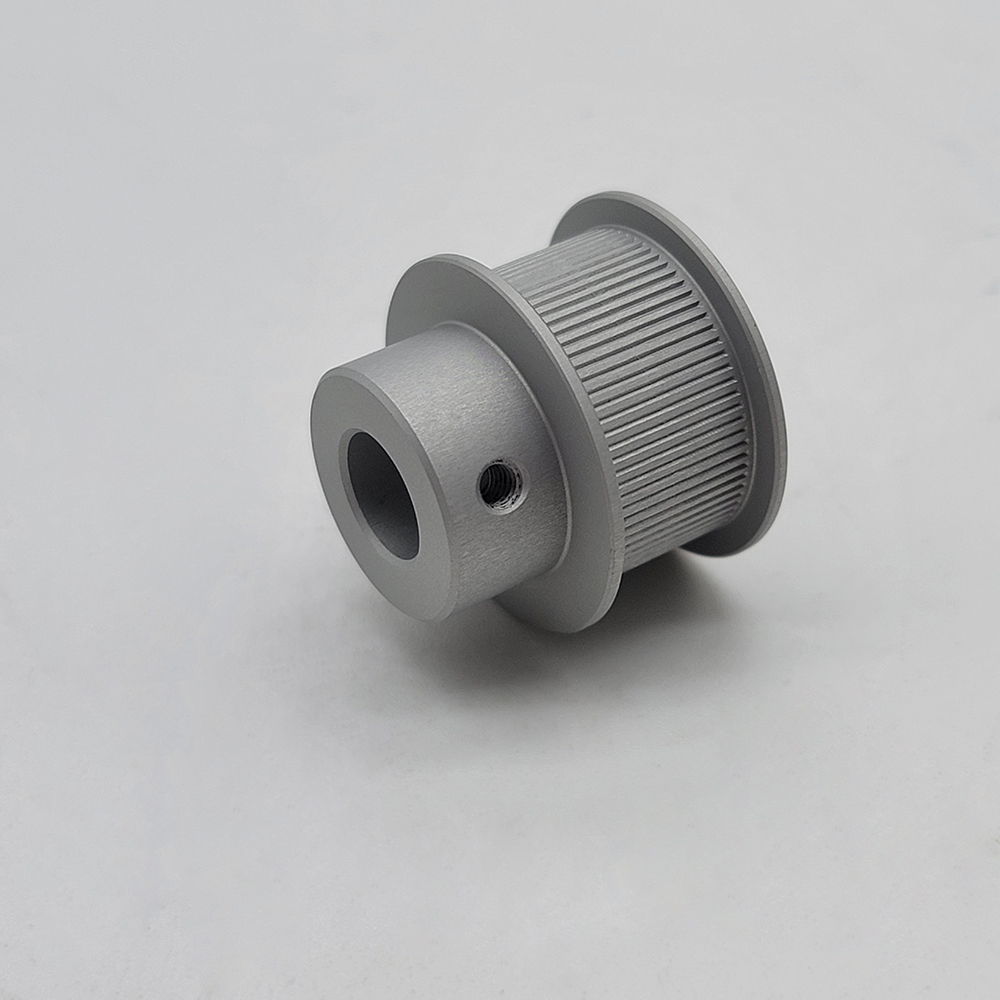
Why Standard Pulleys Don't Always Fit
Timing belt pulleys are designed to match the pitch and tooth profile of timing belts, ensuring slipfree power transmission. In mass-market equipment, standardized pulleys work sufficiently. But in industries such as robotics, aerospace, medical devices, or advanced automation, even minor deviations can lead to performance inefficiencies.
Situations where standard pulleys fall short include:
- Non-standard shaft diameters or mounting patterns
- Space constraints requiring modified pulley geometry
- Special operating environments (humidity, chemical exposure, temperature extremes)
- Precise torque or speed ratios not available in catalog sizes
- Requirement for minimal backlash or ultra-smooth rotation
- Integration with other custom parts or assemblies
Integration with other custom parts or assemblies
Customization Parameters: What Can Be Tailored?
Tooth Profile an Pitch
Custom pulleys can be machined to fit any timing belt standard, including:
- Trapezoidal (XL, L, H)
- Metric (T2.5, T5, T10)
- High Torque Drive (HTD)
- GT2/GT3 profiles
- RPP, ATS, AT10, and other proprietary forms
Even belts with rare or legacy profiles can be matched accurately.
Number of Teeth /Pulley Diameter
Adjusting tooth count changes gear ratio and influences speed and torque. Custom pulleys can be sized for:
- Compact configurations
- Specific torque requirements
- Modified timing ratios
Bore and Mounting Interface
Bore customization includes:
- Plain bore
- Keyed bore (with keyways and set screws)
- Taper lock or QD bush interface
- Splined or custom profile shafts
This allows seamless integration into existing machinery or new assemblies.
Material Selection
Material choice impacts weight, corrosion resistance, thermal behavior, and cost.
- Aluminum -lightweight and corrosion-resistant
- Steel / Stainless Steel - high strength, durable
- Brass / Bronze -reduced friction, non-sparking
- Plastics (e.g., POM, Nylon) - for noise-sensitive or lightweight applications
- Composites – used in aerospace or niche sectors
Surface Treatments
Surface treatments improve performance, such as:
- Anodizing (for wear resistance, aesthetics)
- Zinc plating or black oxide coating (for corrosion protection)Polishing or grinding (for high-speed, low-noise systems)
- Polishing or grinding (for high-speed, low-noise systems)
- Hardening processes (for high-wear environments)
In modern industrial environments where reliability, precision, and efficiency are paramount, custom timing belt pulleys have evolved from niche solutions to essential mechanical components. Their ability to solve non-standard design challenges makes them ideal for OEMs, equipment integrators, and engineers working across automation, medical, aerospace, and manufacturing sectors.
Polyurethane Roller&wheel
Shock Absorbing Products
Pulley Wheel
Ball Transfer Unit
Spring Plunger
CNC Parts