Timing belt pulleys are core components in mechanical systems where precise power transmission is essential. From factory automation to medical equipment, these pulleys are paired with timing belts to ensure synchronized movement between shafts, often without the risk of slippage. But not all timing belt pulleys are created equal—different types serve different purposes, materials, and motion control needs.
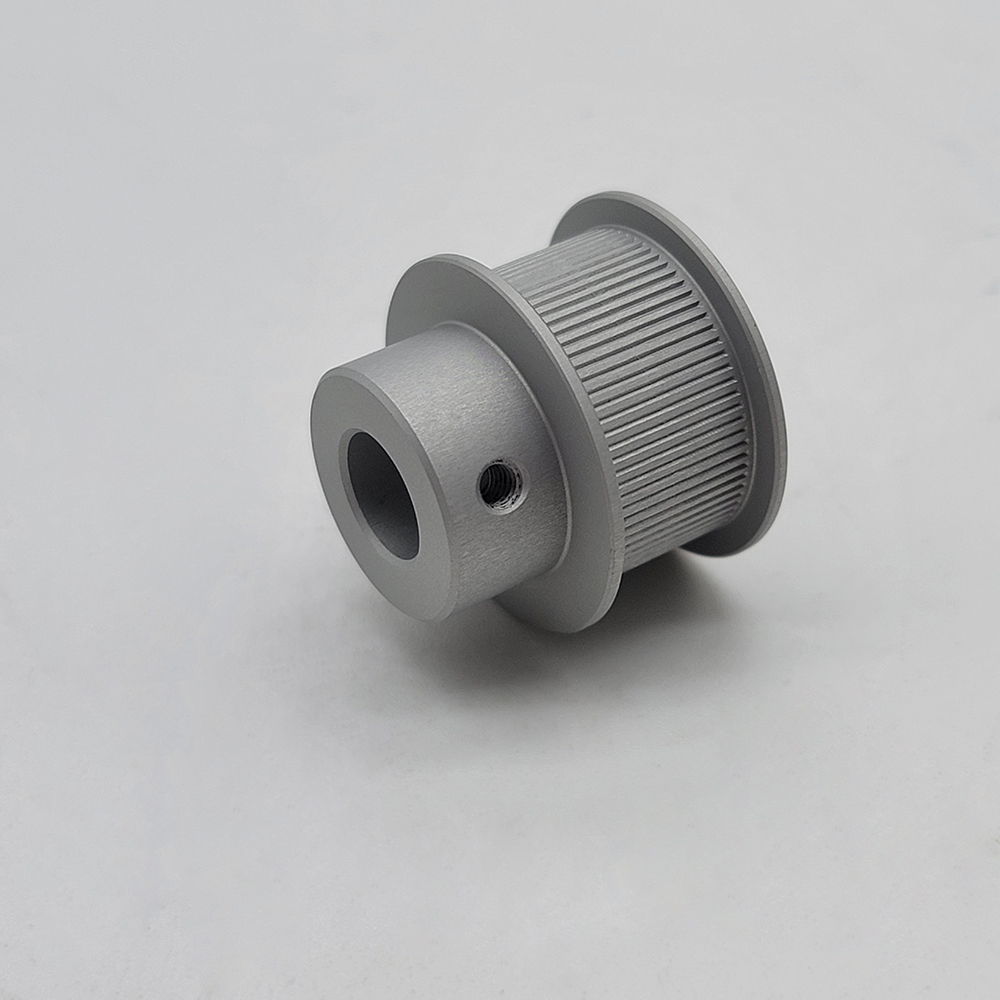
1.By Tooth Profile: Matching Belt Geometry
The tooth profile of a timing pulley must exactly match that of the timing belt. Several profiles have been standardized to accommodate different torque loads, noise levels, and alignment requirements.
Trapezoidal Tooth Pulleys
- Common standards: MXL, XL, L, H, XH
- Feature: Trapezoidal teeth
- Use: Light-duty machinery, small mechanical drives
Metric Trapezoidal (T Profile)
- Standards: T2.5, T5, T10, T20
- Feature: Metric pitch, similar to inch-based trapezoidal
- Use: Light-duty machinery, small mechanical drives
HTD (High Torque Drive) Pulleys
- Standards: 3M, 5M, 8M, 14M
- Feature: Curved teeth, higher load capacity
- Use: Automation, power tools, robotics
GT (Gates Tooth) Pulleys
- GT2, GT3, GT5 profiles
- Feature: Precise, low-backlash, excellent positioning
- Use: 3D printers, CNC machines, motion control
AT Pulleys (Anti-Backlash Metric Profile)
- AT Pulleys (Anti-Backlash Metric Profile)
- Feature: High stiffness, accurate positioning
- Use: Linear drives, high-torque applications
2.By Flange Configuration: Preventing Belt Displacement
Timing belts can wander off track, especially in vertical or high-speed systems. Pulley flanges help maintain belt alignment.
No Flange
- Use: When belt alignment is constrained by other components
Single-FlangPulleys
- Use: When one side is constrained by a wall or another pulley
Double-Flange Pulleys
- Use: For longer shafts or when alignment cannot be physically guided
3.By Bore Type: Mounting on Different Shafts
How a pulley connects to a shaft influences torque transmission, ease of assembly, and long-term durability.
Plain Bore
- Requires custom fitting or adhesives
- Best for custom press-fit designs
Keyed Bore with Set Screw
- Offers rotational locking
- Common in medium-duty applications
Taper Lock / QD Bush
- Easy installation and removal
- High torque transmission
- Used in heavy-duty or industrial settings
Splined Bore
- Transfers torque via matched splines
- Ideal for precision motion or quick-assembly systems
4.By Material: Balancing Weight, Durability, and Environment
Aluminum Pulleys
- Aluminum Pulleys
- Good for mid-load applications
- Stainless steel variants resist corrosion
Steel / Stainless Steel Pulleys
- High strength
- Suitable for harsh environments or heavy loads
- Stainless steel variants resist corrosion
5.Specialty Variants: Engineered for Functionality
Idler Pulleys
- Designed to maintain belt tension
- Can be smooth or toothed
- Mounted on bearings
Double Pulleys (Dual Grooved)
- Drive two belts simultaneously
- Used in multi-axis systems
Timing Pulley with Integrated Bearing
- Often found in compact assemblies
- Reduces component count and simplifies design
Backlash-Free Pulleys
- Tight fit with anti-backlash belts
- Ideal for servo-driven and high-precision systems
The type of timing belt pulley you choose directly impacts the performance, efficiency, and longevity of your power transmission system. Whether it's a standard trapezoidal pulley or a highprecision GT3 model, understanding the variety of profiles, mounting options, materials, and use cases helps ensure proper design decisions.
Polyurethane Roller&wheel
Shock Absorbing Products
Pulley Wheel
Rack And Pinion
Spring Plunger
CNC Parts