In an era where automation and smart manufacturing dominate engineering headlines, a familiar mechanical component continues to play a fundamental—if quiet—role in the movement of machines: the pulley wheel.
Despite its apparent simplicity, the pulley wheel remains indispensable in countless industrial systems. From overhead lifting mechanisms to high-speed conveyors and material tensioning devices, pulley wheels facilitate motion transmission, load redirection, and force balancing. Their design has seen consistent refinement, driven by evolving mechanical requirements and the introduction of new applications.
The Core Role of the Pulley Wheel
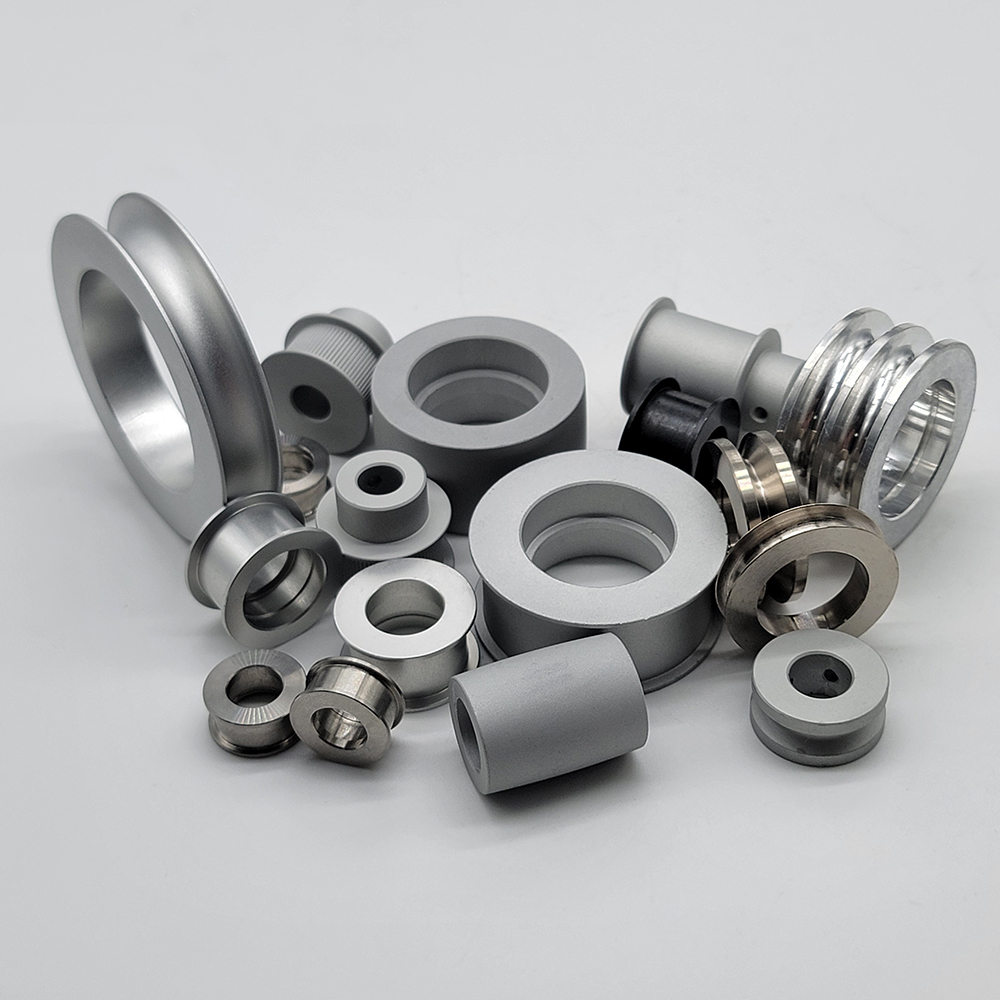
A pulley wheel functions as part of a system designed to transmit force and motion via belts, ropes, or cables. It typically consists of a grooved wheel mounted on an axle or shaft, allowing rotation while maintaining directional control of the tension medium.
In basic form, pulley systems have existed for thousands of years. What has changed in modern industry is the precision, load requirements, and environmental demands placed on these components. In automated lines, pulley wheels often serve not just to redirect force but also to maintain belt alignment, minimize vibration, and withstand continuous operation over thousands of cycles.
Evolving Designs for Evolving Demands
As manufacturing shifts toward higher throughput and tighter tolerances, pulley wheel design has followed suit. Traditional cast iron wheels are still common in some heavy-duty applications, but for lighter and faster-moving systems, manufacturers have moved toward engineered alloys, thermoplastics, and composite-hub assemblies.
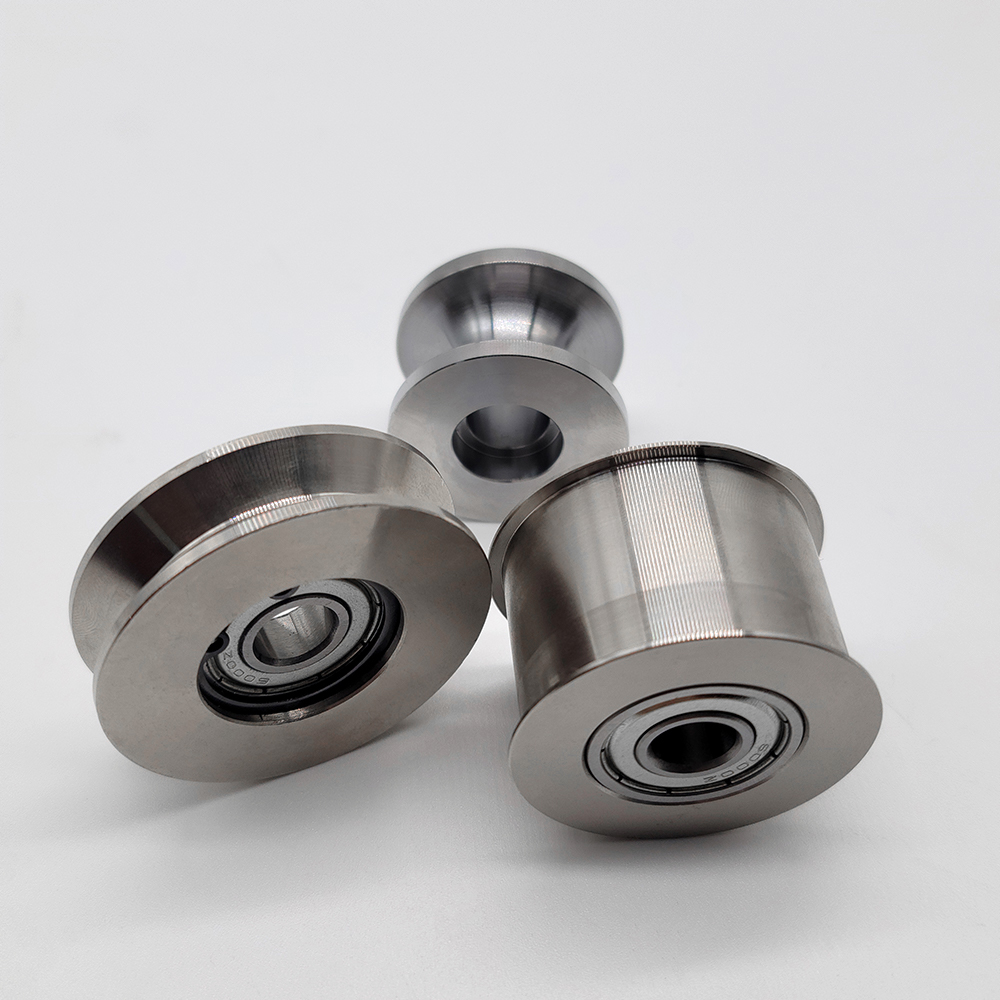
Flat, crowned, V-grooved, and timing-belt-compatible designs are available to match various belt types. Flanged and unflanged options help retain belt position, while sealed bearing integrations reduce maintenance in dusty or humid environments.
In sectors like logistics, cleanroom production, and automated inspection systems, lightweight pulley wheels reduce inertia, allowing faster acceleration and more responsive control. Meanwhile, hoisting and crane systems continue to rely on heavy-duty steel pulleys with deep grooves and reinforced hubs to manage dynamic tension loads.
Tension and Tracking: Performance Under Load
The most critical functional requirement of a pulley wheel is reliable performance under load. Whether guiding a conveyor belt in a warehouse or controlling a lift cable in a vertical hoist, the pulley must retain alignment and minimize slip or deviation.
To achieve this, designers focus on factors such as:
-
Groove profile and geometry
-
Surface finish and friction coefficient
-
Shaft fitment precision
-
Bearing specification and lubrication
For high-speed applications, even minor misalignments or uneven groove wear can cause belt tracking issues, premature failure, or system inefficiencies. As such, some manufacturers now offer dynamically balanced pulley wheels for use in precision machinery.
Maintenance, Lifespan, and Predictability
One of the primary advantages of pulley wheels in industrial settings is their relatively predictable wear pattern. Unlike components subject to high-impact forces, pulley wheels typically degrade gradually, making them suitable for planned maintenance schedules.
However, poor installation, misaligned shafts, or improper belt tensioning can accelerate wear. Regular inspection of groove integrity, bearing condition, and surface wear is essential—particularly in mission-critical environments like elevators, automated storage systems, or mining conveyors.
Modern pulley wheels increasingly feature replaceable hubs, modular groove inserts, or removable bearing assemblies, allowing partial component replacement rather than full unit swaps.
Industry Trends and Observations
While pulley wheels may not draw attention like sensor arrays or robotic arms, their continued refinement supports the broader goals of reliability and uptime in industrial design.
Some notable trends include:
-
Custom groove machining: to match specialized belts or wire ropes
-
Corrosion-resistant coatings: for marine or outdoor applications
-
High-temperature bearing options: for use in furnaces or chemical processing plants
-
Integrated encoders or sensors: for real-time monitoring of rotation or tension
As machine design becomes more modular and tailored to specific functions, the role of the pulley wheel is increasingly application-specific rather than one-size-fits-all.
Polyurethane Roller&wheel
Shock Absorbing Products
Ball Transfer Unit
Spring Plunger
Pulley Wheel
CNC Parts