Comparing Round vs. Square Shock Absorbing Components in Industrial Applications
Shock absorbing materials are essential in machinery, transportation systems, and structural equipment to mitigate impact, reduce vibration, and protect mechanical components. These materials often come in different shapes and configurations depending on their application. Among the most commonly used are round and square (or rectangular) shock-absorbing blocks made from materials such as polyurethane, rubber, or thermoplastic elastomers. While both geometries aim to serve the same core purpose—dampening force—their shape plays a critical role in determining load distribution, installation flexibility, energy absorption behavior, and durability.
1. Functional Purpose of Shock Absorbing Materials
Shock absorbing materials serve a range of functions:
- Vibration isolation in rotating or reciprocating equipment
- Impact absorption in loading zones or automated lines
- Noise reduction in conveyor or mobile systems
- Mechanical cushioning between metal parts or during contact closure
These materials are typically made from high-resilience polymers (e.g., polyurethane, rubber compounds) and are designed with specific geometries to match expected loading conditions.
2. Geometry and Force Distribution
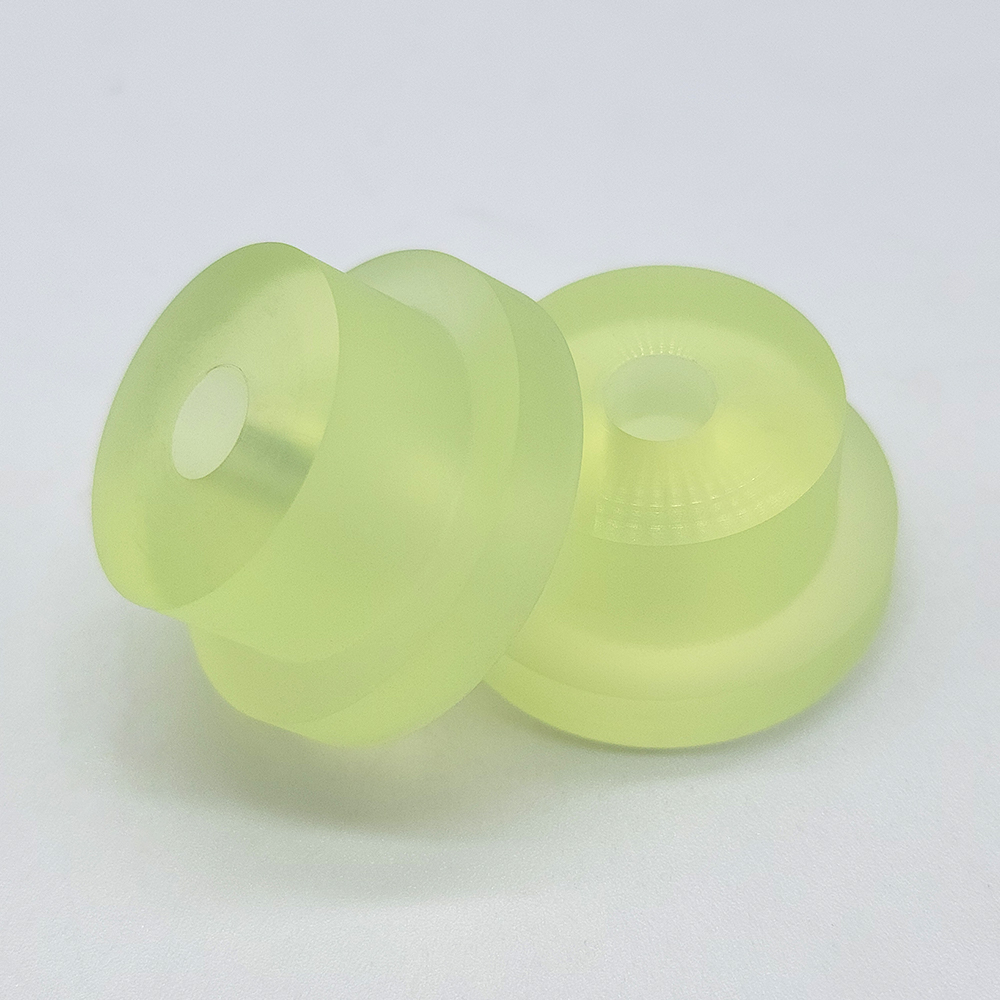
Round Shock Absorbers
Round shock absorbers are typically cylindrical in shape and are often selected for:
- Radial force distribution: Load is dispersed evenly across the circular profile
- Rotational symmetry: Ideal for rotating systems, such as bushings or shaft cushions
- Compact installation: Fit easily into round housings or counterbores
Use Case Example:
In a rotating shaft buffer or in-between gear assemblies, a round damper allows uniform deformation, reducing imbalance and preventing component wear.
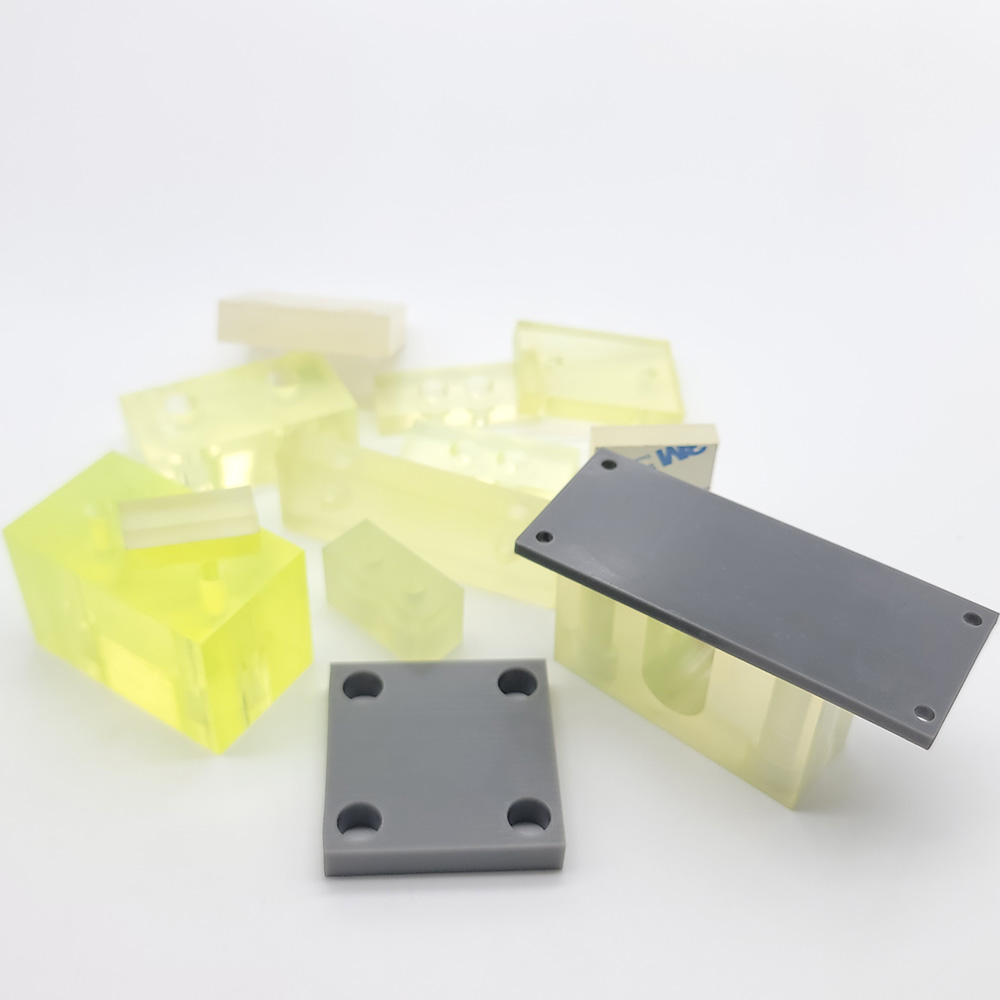
Square Shock Absorbers
Square (or rectangular) shock absorbers provide:
Square (or rectangular) shock absorbers provide:
- Larger surface contact area: Suitable for flat interfaces or square mounting plates
- Improved lateral stability: Prevents twisting or rolling under directional load
- Ease of alignment: Corners and straight edges align neatly with structural components
Use Case Example:
In conveyor stops or robotic bumpers, square pads provide controlled compression and maintain stable positioning under repeated impact.s
3.Mounting and Installation Considerations
Round Design Pros:
- Easier to insert into pre-drilled circular holes
- Well-suited for press-fit or sleeve-mounting applications
- Better for use in tight axial assemblies
Square Design Pros:
- Square Design Pros:
- Reduces rotational movement post-installation
- Easier to bond or fasten to flat plates using adhesives or bolts
Installers often choose shape based not only on performance, but on compatibility with the surrounding structure and ease of maintenance.
Material Behavior in Relation to Shape
- Polyurethane: Offers both round and square options with high rebound resilience
- Natural rubber: Often molded square for better surface grip and flexibility
- NBR/EPDM blends: Square versions preferred in oil-resistant, chemically exposed areas
- Thermoplastic elastomers: Used in both shapes for precision molded components
Different materials also behave differently depending on the shape. For example, square polyurethane pads may display stiffer corners, which help restrict lateral slip
Choosing the Right Shape: Key Factors
When selecting between round and square shock absorbers, consider:
- Load direction: Axial vs. lateral
- Space constraints: Hole or mounting area geometry
- Rebound requirement: High or low elasticity
- Friction needs: Is slip desirable or must be minimized?
- Dynamic motion: Rotating vs. static load absorption
A load analysis or field test is often necessary to validate which shape yields better performance under actual use conditions.
Both round and square shock absorbing materials serve vital roles in industrial environments. While their basic function remains the same—dampening shock and vibration—their performance and suitability depend greatly on their shape.
- Round components offer symmetry, even compression, and are best in rotating or confined spaces
- Square components provide superior stability, flatter contact, and better resistance to misalignment
By understanding these shape-related differences, designers and engineers can make more informed decisions, ensuring better system longevity, reduced maintenance, and smoother operation.
Polyurethane Roller&wheel
Shock Absorbing Products
Pulley Wheel
Rack And Pinion
Spring Plunger
CNC Parts