Vibration and impact forces are unavoidable in modern industrial machinery. Left unchecked, these forces can shorten equipment lifespan, reduce accuracy, and even cause safety risks. In this context, polyurethane (PU) shock absorbing blocks have emerged as a preferred choice across sectors ranging from manufacturing and logistics to mining and material handling.
What Are Polyurethane Shock Absorbing Blocks?
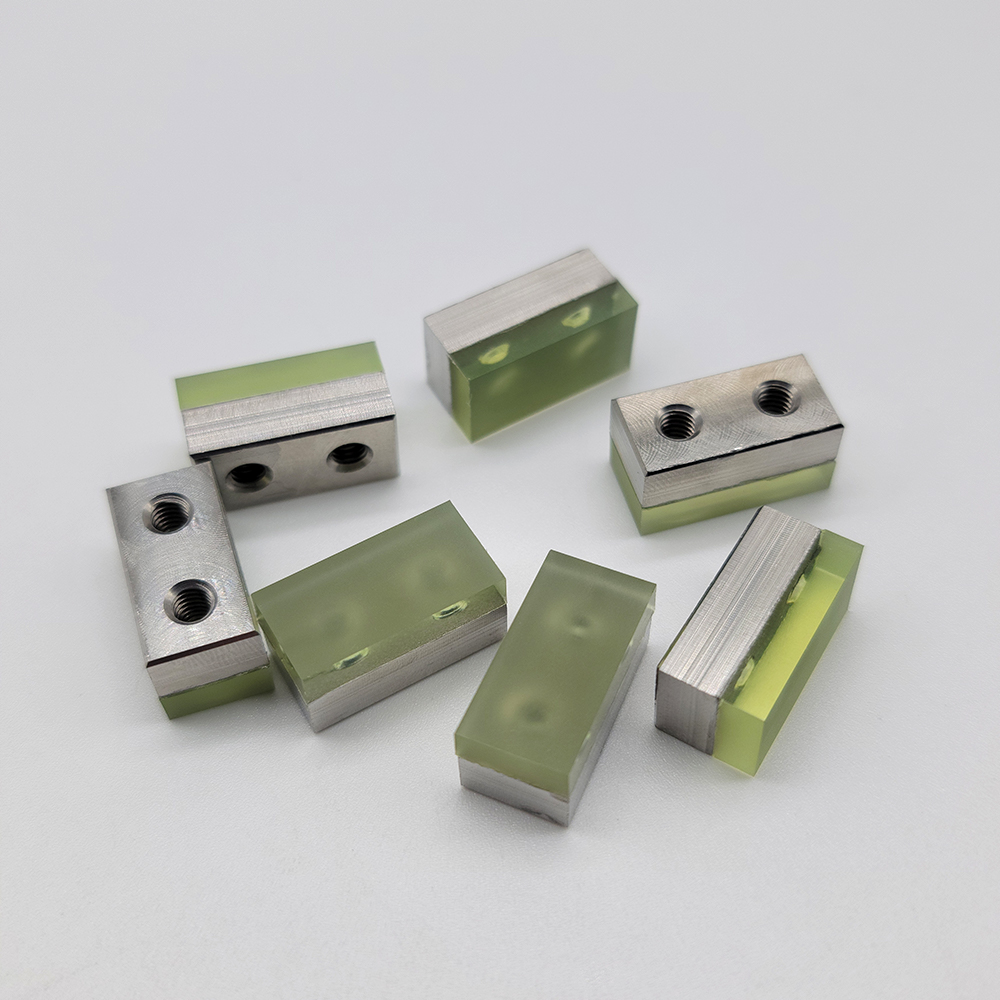
Polyurethane shock absorbing blocks are solid or molded components made from elastomeric PU materials, specifically formulated to absorb energy, dampen vibration, and cushion mechanical impact.
They typically come in rectangular, square, cylindrical, or custom-molded forms, and are engineered to perform reliably under dynamic loads, repeated compression, or mechanical shocks. Unlike rubber or metal springs, polyurethane blocks offer a balanced combination of stiffness, resilience, and durability, making them a stable solution for long-term use.
Key Material Properties
Polyurethane as a material stands out due to its tunable physical characteristics. Depending on the application, PU shock absorbers can be formulated to:
- Withstand heavy loads without permanent deformation
- Dissipate energy to prevent equipment damage
- Operate across a broad temperature range, typically -40℃ to +80℃
- Resist oils, solvents, and abrasion, which are common in industrial environments
- Resist oils, solvents, and abrasion, which are common in industrial environments
These properties are essential for systems that demand consistent damping and predictable mechanical response.
Common Applications
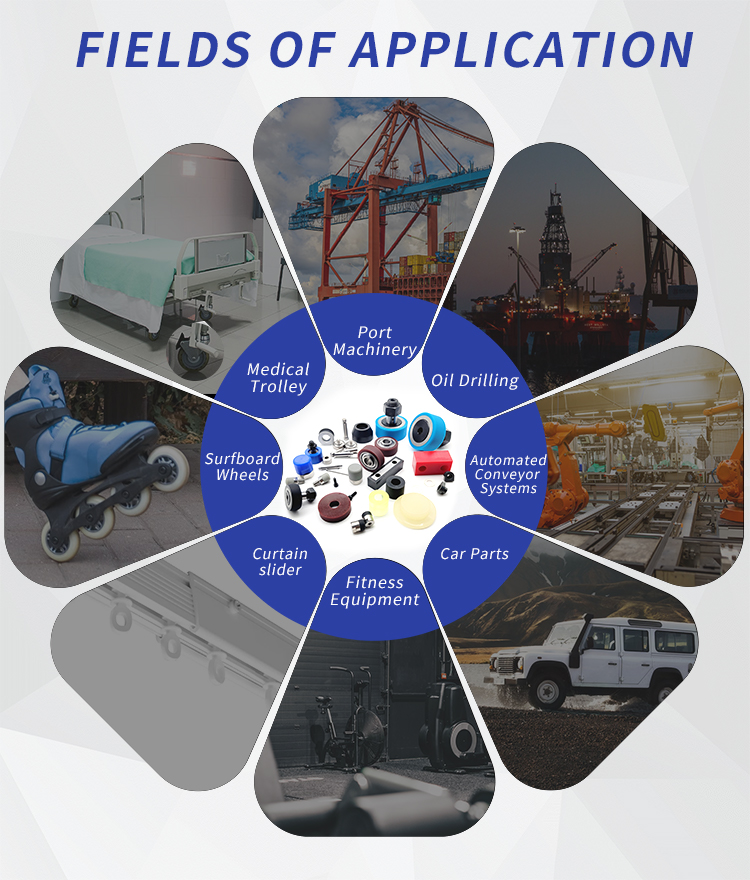
Polyurethane shock absorbing blocks are widely used in both fixed installations and mobile systems. Common examples include:
Heavy Machinery and Presses
- Heavy Machinery and Presses
- Used to absorb recoil energy in mechanical arms or press brakes
- Serve as impact stoppers in automated forging systems
Conveyor Systems and Material Handling
- Positioned under conveyor chutes, helping absorb load drops from bulk materials
- Mounted as buffers at belt tensioners to reduce shock transfer
- Used in pallet stops or end-position dampers
Vehicle and Transport Equipment
- Damping blocks in AGVs (Automated Guided Vehicles) or forklifts
- Used in suspension systems for carts, trolleys, and mobile platforms
- Vibration control in railway or mining wagons
Why Polyurethane?
Compared to traditional materials like rubber or metal, polyurethane offers a more controlled and longer-lasting damping effect. Key advantages include:
- Tailored hardness (Shore A or D) for different load requirements
- Higher tear and fatigue resistance than standard elastomers
- Excellent compression set recovery under repeated load cycles
- Custom moldability to suit application-specific geometries
- Longer lifespan, even under continuous mechanical stress
Importantly, PU blocks also maintain performance even in harsh operating environments, including dusty, oily, or wet conditions.
Polyurethane shock absorbing blocks have earned a reliable place in industrial engineering for their effective damping, long service life, and design adaptability. Their performance across a range of demanding environments and applications makes them a practical choice for engineers seeking efficient and low-maintenance solutions to vibration and impact challenges.
Polyurethane Roller&wheel
Shock Absorbing Products
Pulley Wheel
Ball Transfer Unit
Rack And Pinion
Spring Plunger
CNC Parts