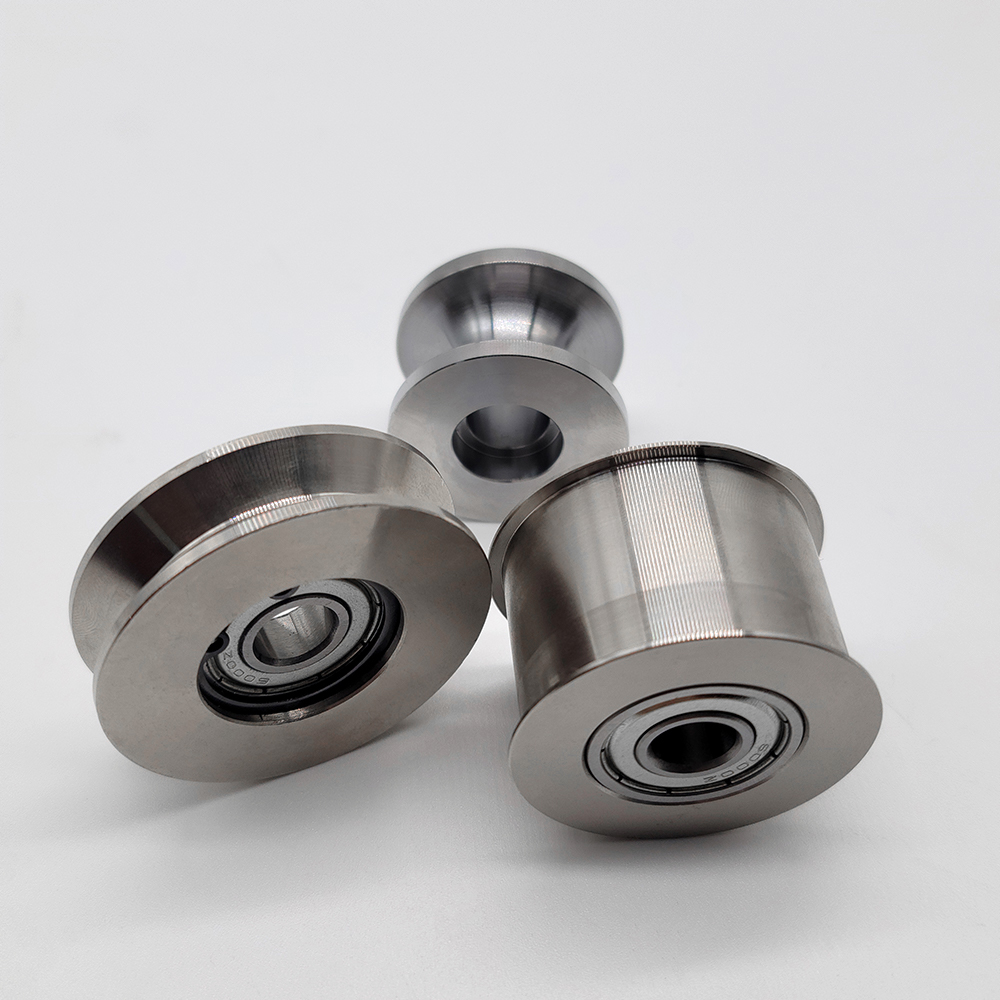
In mechanical transmission systems and material handling applications, pulley wheels are key components that guide, drive, or redirect belts, ropes, and cables. While much attention is given to pulley geometry, bearing design, and material composition, the surface treatment of pulley wheels often determines how well these components perform in real-world environments.
Why Surface Treatment Matters
Although pulley wheels are typically made from aluminum alloys, carbon steel, stainless steel, or engineering plastics, their surface layer is the first to interact with external forces, environmental exposure, and mechanical wear.
Surface treatment is critical for:
- Preventing corrosion in humid, chemical, or outdoor environments
- Enhancing wear resistance under constant movement or belt friction
- Reducing noise through smoother surfaces
- Improving coefficient of friction for grip or glide as needed
- Improving aesthetics for visible or exposed assemblies
- Allowing post-process adhesion (e.g., for polyurethane coating)
Common Surface Treatment Methods for Pulley Wheels
Anodizing (for Aluminum Pulleys)
Anodizing is an electrochemical process that thickens the natural oxide layer on aluminum. It offers:
- Excellent corrosion resistance
- Harder surface (up to 60 Rockwell C in hard anodizing)
- Good adhesion base for coatings or bonding
- Coloring capability for identification or branding
Use case: Lightweight aluminum pulley wheels used in conveyor systems or electric vehicles.
Zinc Plating (for Carbon Steel Pulleys)
Zinc plating offers a sacrificial layer to protect steel from rusting. Often combined with chromates for better corrosion resistance.
- Economical surface protection
- Mild anti-wear effect
- Limited temperature resistance
Limitations: Zinc coatings can wear off under repeated belt contact if not passivated or sealed.
Powder Coating
Applied as a free-flowing dry powder and cured under heat, this coating provides:
- Thick, uniform, and durable surface
- Thick, uniform, and durable surface
- Good chemical resistance
Often used on decorative or consumer-facing pulley wheels, especially in fitness equipment or custom industrial designs.
Electroless Nickel Plating
Used to create a hard, uniform, corrosion-resistant coating, even on complex geometries.
- Good wear and corrosion resistance
- Consistent thickness across internal and external surfaces
- High cost, suitable for precision or high-performance applications
Ideal for pulley wheels in high-humidity or chemically aggressive environments.
Shot Blasting or Sandblasting (Pre-Treatment)
Before painting, coating, or bonding, pulley wheels are often mechanically treated with abrasive blasting to:
- Remove scale or contaminants
- Increase surface roughness for better adhesion
- Deburr sharp edges
This step ensures coating consistency and bonding integrity.
In pulley wheel manufacturing, surface treatment is not merely cosmetic. It plays a direct role in determining performance, lifespan, and functional compatibility. From anodizing and powder coating to nickel plating and shot blasting, each method serves a distinct purpose-and selecting the right one depends on application-specific requirements, environmental conditions, and processing needs.
Polyurethane Roller&wheel
Shock Absorbing Products
Pulley Wheel
Ball Transfer Unit
Spring Plunger
CNC Parts