In industrial settings, polyurethane-coated rollers are widely used for their superior abrasion resistance, flexibility, and load-bearing performance. While their mechanical and chemical properties are often in the spotlight, the role of color in these rollers is frequently overlooked. Many assume that color is purely cosmetic or for branding. In reality, color in polyurethane coatings serves several technical and operational purposes, especially in manufacturing and logistics environments where visual management, identification, and chemical formulation control are essential.
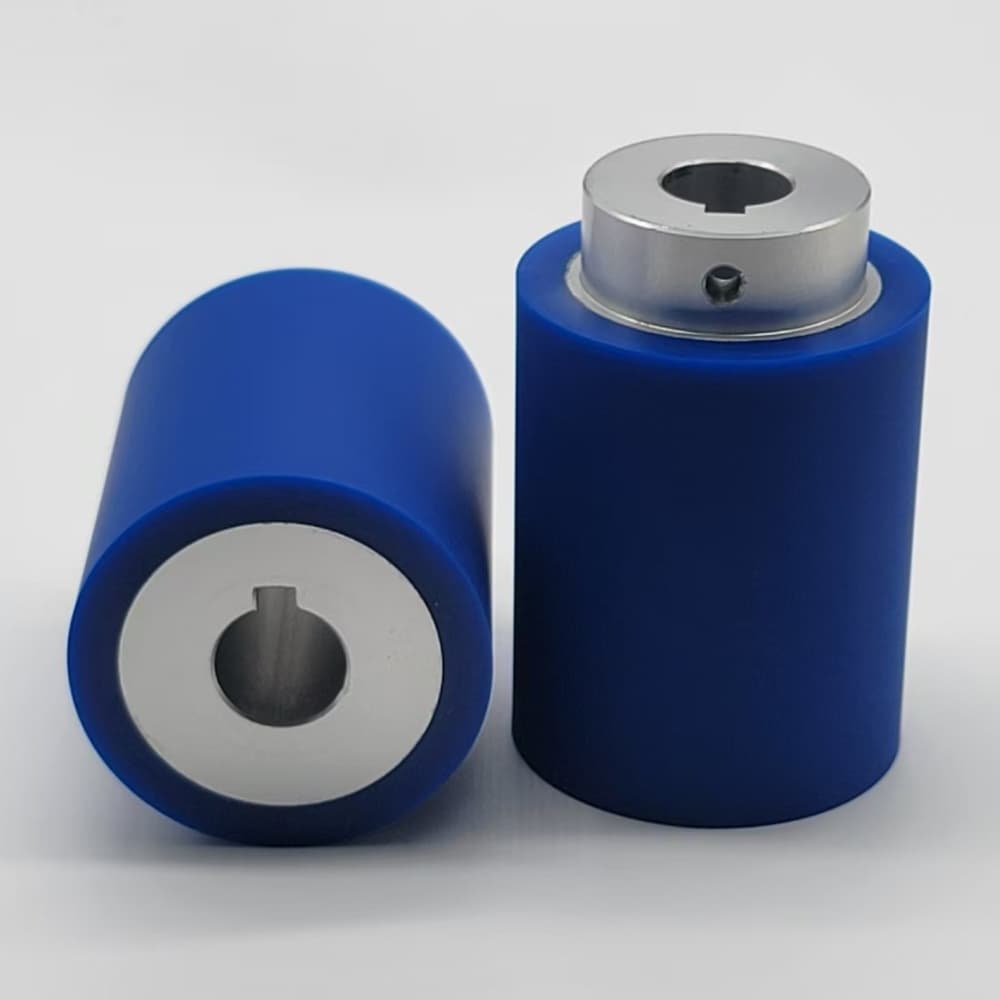
Color as a Functional Identifier
In busy production lines, visual identification is critical for fast and accurate sorting. Manufacturers often use color-coded rollers to indicate:
- Hardness levels (durometer)
- Application categories
- Temperature or chemical resistance
Formulation Tracking and Quality Control
Polyurethane formulations often involve various additives: anti-static agents, UV stabilizers, flame retardants, and plasticizers. When using color pigments in controlled ways, manufacturers can link a specific color to a unique chemical recipe.
Benefits:
- Ensures traceability of batch compositions
- Prevents mixing different formulations during processing
- Enables quick on-site confirmation without testing
Safety and Maintenance Visibility
Color plays an important role in safety communication and wear detection:
- Bright colors (e.g., yellow, orange) help rollers stand out, improving visibility in dark or fastmoving environments
- Contrasting colors can show signs of wear more clearly
- UV-sensitive pigments can be added to highlight deterioration under special lighting during inspection
Compliance with Industry Standards
Certain industries require specific color codes to comply with health or operational guidelines:
- Food processing: Use of white or blue rollers made with FDA-compliant pigments
- Electronics manufacturing: Use of black ESD-safe coatings to prevent static discharge
- Pharmaceuticals: Color-free or naturally translucent coatings with high purity
- By aligning roller color with these compliance needs, manufacturers avoid regulatory issues and maintain operational consistency.
In polyurethane-coated rollers, color is far more than a surface-level attribute. It plays a practical role in process control, visual management, chemical formulation verification, and safety. By understanding the implications of color and implementing thoughtful color coding, manufacturers and end-users alike can improve efficiency, compliance, and operational reliability.
Polyurethane Roller&wheel
Shock Absorbing Products
Pulley Wheel
Ball Transfer Unit
Spring Plunger
CNC Parts