Cam followers—also known as track followers—are specialized rolling element bearings designed to follow cam lobes or linear motion tracks in mechanical systems. Though often compact in size, these components play an essential role in enabling reliable, guided motion in automated machinery, material handling systems, and mechanical linkages.
Unlike standard ball or roller bearings, cam followers are built to withstand both radial and axial loads, operate in harsh environments, and offer high resistance to misalignment and shock. As manufacturing systems become faster, more compact, and increasingly automated, the importance of cam follower design, materials, and maintenance has grown significantly.
Structural Overview: How Cam Followers Work
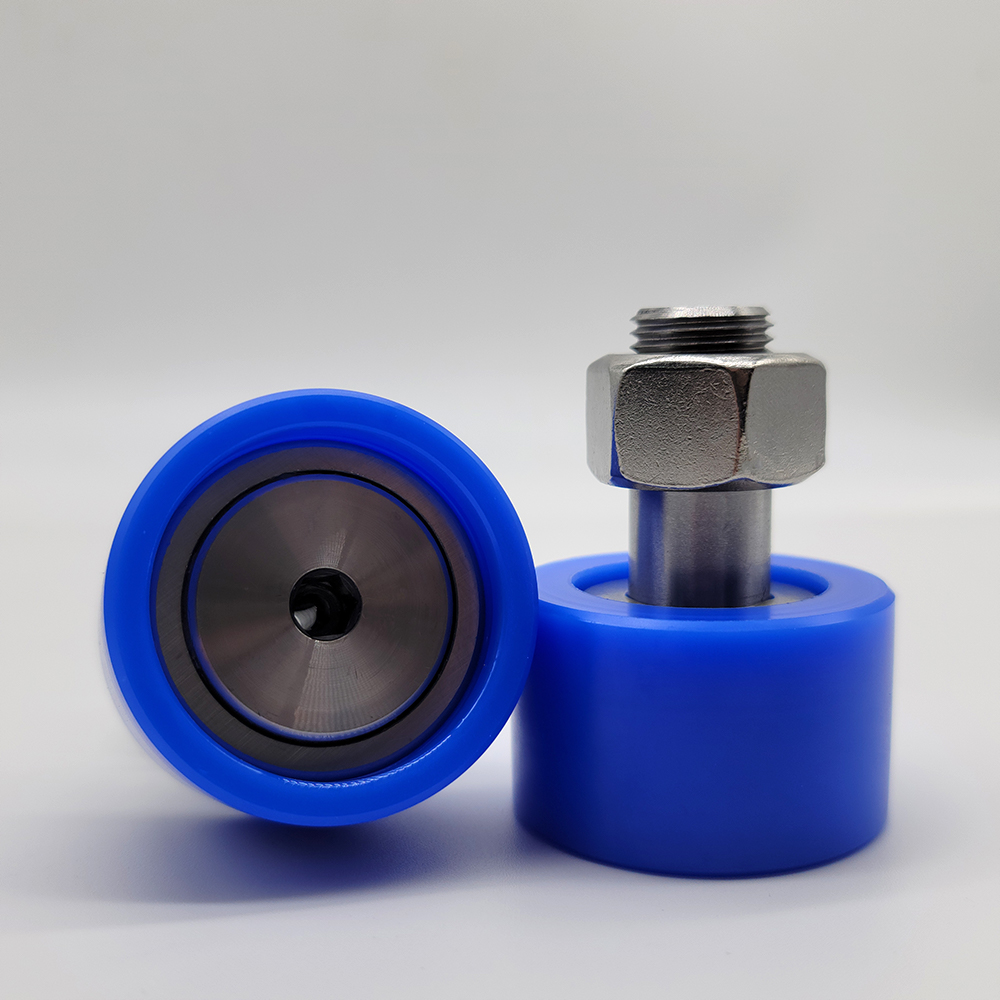
Cam followers typically consist of:
- Outer ring (roller): A thick-walled outer ring that rolls along the cam or track surface, supporting load and minimizing deformation.
- Rolling elements: Needle rollers or cylindrical rollers inside the housing, which distribute loads and enable rotation.
- Stud or yoke: A mounting shaft that can be threaded or flanged, depending on whether it's a stud type or yoke type cam follower.
- Seals and lubrication systems: Designed to retain grease and exclude contaminants for longterm operation.
The robust outer ring and the internal bearing assembly allow cam followers to operate under oscillating and continuous motion, often in demanding applications where conventional bearings would fail prematurely.
Types of Cam Followers
Stud Type Cam Followers
- Commonly made from bearing-grade alloy steels such as 52100 (GCr15), heat-treated for surface hardness
- Simplifies installation
- Common in packaging, conveyors, and textile machinery
Yoke Type Cam Followers
- Require external mounting support (e.g., bolts or press fit)
- Used where high load capacity or compact designs are required
- Typical in die-cutting machines and robotics
Full Complement vs. Caged Roller Design
- Full complement cam followers have more rollers and higher load capacity but at the cost of speed and wear resistance
- Caged designs allow better lubrication and speed performance
Materials in Focus: What Makes a Reliable Cam Follower?
OuterRingand Stud
- Commonly made from bearing-grade alloy steels such as 52100 (GCr15), heat-treated for surface hardness
- Stainless steel variants are used in food-grade and chemical environments
- For heavier-duty use, carburized steel may be used to improve core toughness
Rolling Elements
- Typically hardened needle or cylindrical rollers
- Surface-finished for minimal friction and consistent load distribution
Seals and Lubrication
- Nitrile rubber (NBR) or fluoroelastomer (FKM) seals protect against ingress of contaminants
- Grease-packed for life or with re-lubrication ports for serviceable designs
Cam followers may appear simple in form, but their role in supporting controlled, repeatable, and precise motion is foundational to industrial automation and equipment performance. As machinery becomes more compact, faster, and smarter, the demand for durable, efficient, and easily maintainable cam followers continues to grow.
Polyurethane Roller&wheel
Shock Absorbing Products
Ball Transfer Unit
Spring Plunger
CNC Parts