In engineering and manufacturing, vibration is more than a nuisance—it's a source of mechanicalwear, noise, component failure, and operational inefficiency. Industries rely heavily on dampingmaterials to isolate, absorb, and reduce unwanted mechanical energy. Among the many materialsavailable, polyurethane has emerged as a highly adaptable solution for vibration and shockdamping. Its unique combination of elasticity, strength, and chemical resistance makes it a favoredchoice across automotive, machinery, construction, and material handling sectors.
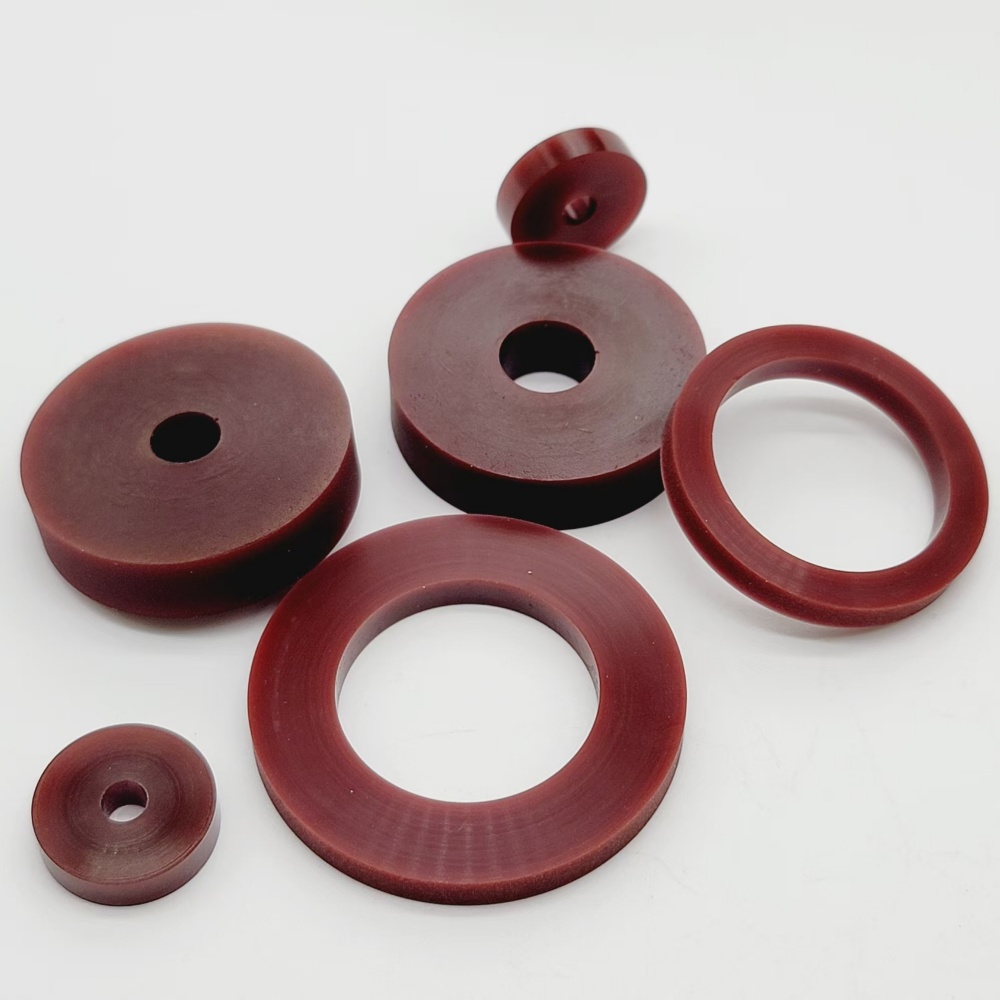
Why Damping Matters in Industrial Applications?
Uncontrolled vibration affects performance and longevity in multiple ways:
- Accelerated fatigue in metal structures and welds
- Noise pollution, impacting operator comfort and compliance with safety standards
- Precision disruption in automated systems and instrumentation
- Component failure due to cyclic loading or impact
To mitigate these issues, engineers apply damping materials at contact points, mounting interfaces, supports, and joints. The goal is to reduce vibrational transmission and absorb kinetic energy before it reaches sensitive components.
Polyurethane's Core Damping Characteristics
Polyurethane combines elastomeric behavior with exceptional mechanical durability. Its suitability for vibration damping stems from:
- Energy Absorption Capacity: Polyurethane can dissipate kinetic energy across a widefrequency and amplitude range.
- Load Tolerance: It performs well under compressive loads, making it suitable for high-pressuremounting or support applications.
- Customizable Hardness: Ranges from Shore A to Shore D, allowing precise tuning of stiffness and flexibility.
- Elastic Recovery: Returns to shape quickly without permanent deformation, even after repeated stress.
- Temperature and Chemical Resistance: Retains damping performance in environmentsinvolving oil, solvents, or thermal cycles.
Common Applications in Industry
Polyurethane damping materials appear in multiple forms and functions:
- Mounting pads and bushings: reduce vibration transfer between the motor, gearbox or HVAC unit and its frame.
- Roller Coatings and Wheels: Absorb micro-impacts and reduce vibration during conveyance and rotation.
- Isolator Blocks: Used in rail systems, compressors, and engine mounts to reduce structureborne vibration.
- Tool and Machine Feet: Dampen contact between equipment and flooring, minimizing transmission of mechanical noise.
- Pipe and Cable Supports: Damping inserts or coatings minimize vibration in suspended systems.
Design Considerations
Choosing or designing polyurethane for damping applications involves:
- Defining Load Conditions: Static vs. dynamic loads, amplitude, and frequency of vibration.
- Material Formulation: Different formulations (ether-based, ester-based, MDI, TDI) provide tailored chemical and mechanical performance.
- Geometry: The shape and volume of the part affect its damping characteristics. Thin pads may deflect more, while thicker parts may be stiffer.
- Operating Environment: Exposure to heat, oil, or UV requires adjusted material recipes.
Polyurethane Roller&wheel
Shock Absorbing Products
Pulley Wheel
Ball Transfer Unit
Spring Plunger